- The Raise Report
- Posts
- The 7 by 7 Rule: A Blueprint for Compounding in Real Estate
The 7 by 7 Rule: A Blueprint for Compounding in Real Estate
Chris Lawrence built a repeatable advantage by staying inside a tiny geography for 15 years. Here’s how focus, flexibility, and sequencing created a real downtown flywheel.

Domingo Valadez
January 21, 2026
Hey there, Domingo here 👋
Welcome to The Raise Report — where we break down how top real estate sponsors are raising capital and scaling their portfolios. I also occasionally share the exact playbooks we used at Homebase to build an investor base from zero to over 3,500.
Quick background on me: Before Homebase, we were syndicators too. We didn’t come from institutional backgrounds or deep-pocketed networks. We crowdfunded two deals, went viral twice, and built something that worked. Today, we help other sponsors do the same — streamlining capital raises, back office ops, and investor communication..
This week’s Raise Report features a developer who plays a very different game.
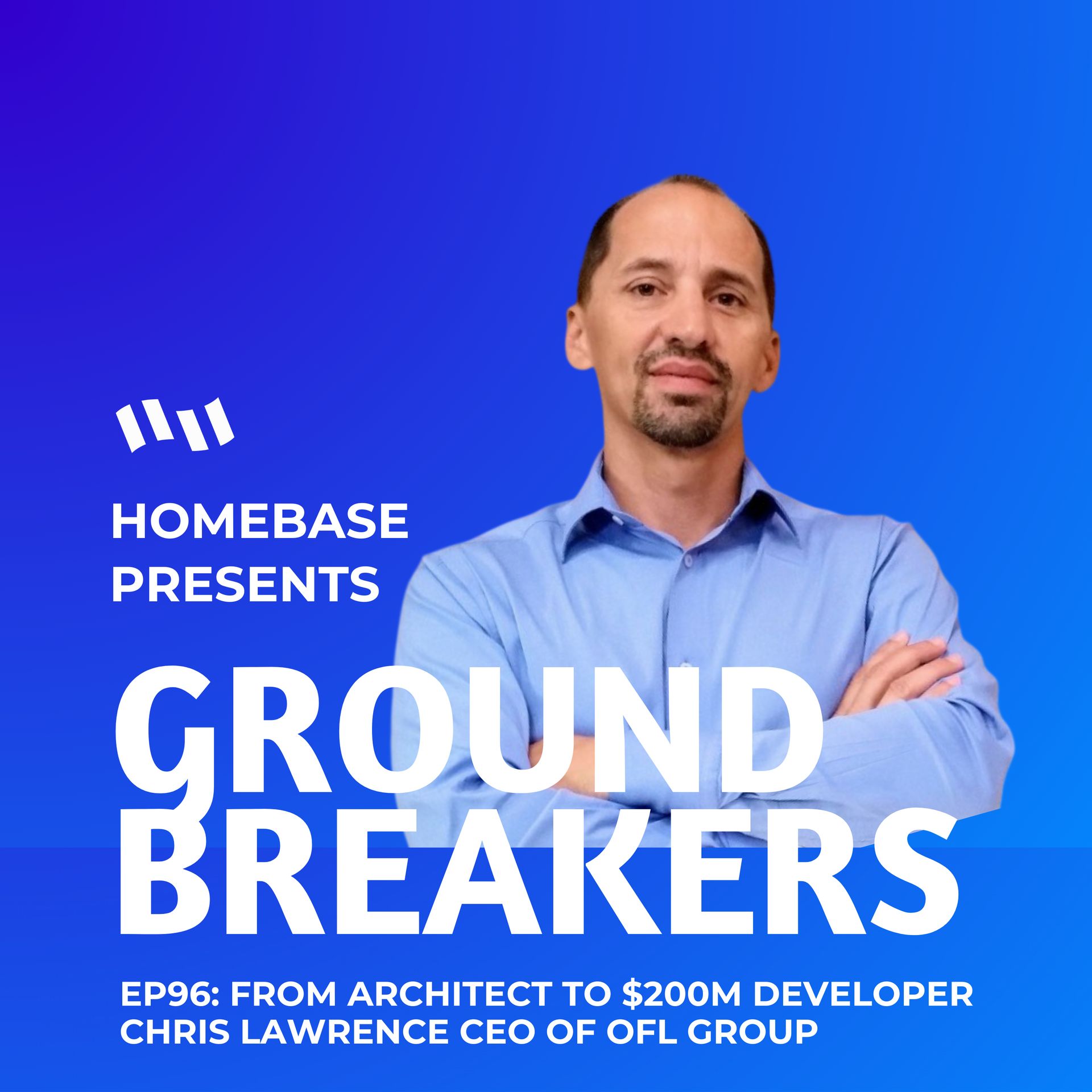
Chris Lawrence is the CEO of OFL Group, and he is also a registered architect with 30+ years spanning design, development, and construction management. He previously built and operated projects in downtown Bryan, Texas that hit 100% occupancy even through Covid. Today, he is leading large mixed use plans that include hundreds of residential units, a hotel concept, and meaningful retail and restaurant space.
What makes Chris interesting is not just what he builds.
It is how narrow his focus is, and how much leverage he creates from that focus.
The 7 by 7 rule: Focus so tight it sounds fake
Chris described himself as “the most hyper focused developer on earth.”
For the past 15 years, he has worked in about seven by seven blocks of downtown Bryan, give or take maybe ten by ten. That is it. He is not chasing five cities, three asset classes, and a new thesis every quarter. He is building depth in one place.
That matters because downtown development is a sequencing problem. Chris’s belief is simple: you cannot grow a real downtown without residents. Heads and beds come first. Once people live there, the retail demand becomes real.
Most people try to start with the storefronts.
Chris starts with the neighbors.
The first townhome deal that stalled for 18 months
Chris’s first development in that area was five luxury townhomes. He thought he had the buyer persona nailed: out of town professionals moving to Bryan for Texas A and M University. They sold one early unit during construction and everything looked like it was working.
Then nothing happened.
For the next year and a half, nobody even asked to buy.
Instead of forcing the market, he did the best thing he could have done: he pivoted the units to rentals. They leased quickly, to the same demographic he originally planned for.
Same customer. Different decision.
His takeaway was one every sponsor should tattoo on their underwriting model: new entrants to a market often want to rent first. They want to test the city, the neighborhood, and the economy before they commit to buying.
The play: Conviction comes from data, not vibes
The biggest reason Chris kept going is that he built conviction the unsexy way.
He spent a full year analyzing the area before making the first big bet. And because he can code, he built a tool “back before there were apps” that pulled county property data into an iPad so he could drive around, take photos, make notes, and see actual values tied to parcels.
He tracked three metrics: owner occupied, leased, and vacant land.
What he found gave him confidence: about 65% of the properties within roughly a one mile radius were leased. In other words, the demand to live there already existed. The product just needed to catch up.
He also has a mindset I wish more operators adopted. He tries to take himself out of the equation and be his own worst enemy. He builds pessimistic pro formas on purpose, so if the deal still works, it is not relying on hope.
Why this works
He compounds local knowledge into unfair advantages
By staying in a tiny geography for 15 years, Chris knows the parcels, the ownership, the incentives, the politics, and the real demand patterns. That knowledge becomes speed, and speed becomes margin.
He underwrites like a skeptic, not a salesman
The iPad app story is fun, but the deeper point is the habit: objective data first, ego second. When he is excited, he tries to disprove himself. That is how you survive cycles.
He sequences development the way downtowns actually grow
Residential first, then the rest. That sequencing is why occupancy and momentum show up, even when the market is not handing out easy wins.
The Risks (and how he mitigates them)
Market timing risk: When you are early, buyers may not show up right away. Chris learned this on day one. His answer was flexibility. If the sales market is not ready, he can shift to rentals and keep the asset performing.
Capital stack risk: Development does not forgive sloppy leverage. Chris talked about using a real equity and bank debt mix, and pairing that with conservative assumptions so the project is not fragile if conditions change.
Story risk: Downtown revitalization can sound like a brochure. Chris keeps it grounded by tying the thesis to real drivers: institutional expansion, major projects, and demand signals that already exist in the data.
What you can learn (and steal)
Focus is a growth strategy
Everyone wants the “bigger market,” but Chris is proof that depth beats breadth when you want compounding advantages. Pick a small map and own it.
If you cannot explain the demand in three numbers, you do not have demand
Owner occupied, leased, vacant. Chris’s framework is simple, but it forces clarity. No storytelling required.
Your underwriting should try to kill the deal
If you want confidence, you earn it by attacking your own assumptions. The goal is not to be optimistic. The goal is to be right enough to survive.
Listen to the full episode
In it, we cover:
Why he intentionally stayed inside seven by seven blocks for 15 years
The first townhome deal that stalled for 18 months, and what it taught him about buyer psychology
How he built an iPad based county data tool to underwrite downtown parcel by parcel
Why pessimistic pro formas are a superpower in development
The sequencing lesson most sponsors get backwards: residents first, retail later
Sponsored by Homebase
Homebase powers $250M+ in real estate syndications. Streamline your fundraising, investor management, and distributions today. Schedule a demo
”Homebase helped me raise $3M in 2024 and already $2M in 2025—plus saved me 100+ hours setting up my deals. It’s become the true ‘home base’ for my capital raising and investor experience.” - Jarek Chu, Haven Residential

Domingo Valadez
Homebase
Co-Founder & CEO